December 22, 2006

December 1, 2006
International online seminar - ESESME Project
 ASCAMM organizes the “Selection of Plastic Materials” seminar on tuesday, 2006 December 12th.
The goal of this online seminar is to give to the participants all the tools they can need to select the optimum material for one application.
This training action is involved in the ESESME Project (www.esesme.com) and will be delivered thought its online platform, simultaneously at the dependencies of all the project participants, in each country (Portugal, Spain, France, United Kingdom,…).
The agenda is
10.00 Arriving & Welcome. Presentation of the seminar and Use of Online PlatformMr. Ramon Costa. ASCAMM Technology Center.
10.10 Selection of Plastic Materials. Online Seminar (ESESME Online Platform)
Ms. Encarna Escudero. ASCAMM Technology Center.Mr. Roberto Gava. ASCMM Technology Center.
- Classification of Plastics
- Amorphous vs. Crystallin
- Properties of Plastic Materials
- Description of Main Plastics
- Selection of Material
12.45 ESESME Platform Review & Conclusions Mr. Toni Martinez. ASCAMM Technology Center.
INFORMATION AND INSCRIPTIONS
Ms. Susanna Hernández & Ms. Maribel Richart
shernandez@ascamm.com / mrichart@ascamm.com
+34 93 594 47 30
Proyecto CENIT Forma-0
Los días 27 y 28 de noviembre de 2007 tuvo lugar una reunión de seguimiento del proyecto CENIT FORMA-0, iniciado hace unos meses, y que cuenta con la participación del Centro Tecnológico ASCAMM.
El encuentro tuvo lugar en el Centro Tecnológico AIN, en Pamplona.
Los representantes de ASCAMM fueron Andrea Castaño y Agustí Chico, del Dep. de I+D+i y Xavier Gazulla, Coordinador de Formación del Departamento de Servicios de Formación de ASCAMM y experto en el ámbito de matricería y estampación.
El objetivo del proyecto es investigar en nuevos procesos de conformado y nuevos materiales y recubrimientos para las herramientas de conformado y corte, con el fin de permitir la fabricación de componentes industriales de aceros de alta resistencia.
Si bien, en primera instancia, el mercado potencial se centra en la automoción, el campo de aplicabilidad de estos aceros es muy amplio, por lo que una vez solventados los problemas derivados de su transformación industrial, su uso se extenderá a otros sectores que puedan explotar sus atractivas propiedades mecánicas.
Para conseguir este objetivo se están llevando a cabo dos líneas de trabajo:
- Investigación de nuevos procesos de aceros AHSS y de tecnologías avanzadas de fabricación de matrices.
- Investigación sobre nuevos materiales y recubrimientos duros aplicables al conformado de aceros AHSS.
El proyecto CENIT FORMA-0 tiene cuatro años de duración y un presupuesto de 24,5 millones de euros. El consorcio está liderado por SEAT y cuenta con una quincena de empresas entre fabricantes de herramientas, fabricantes de aceros, empresas de tratamientos térmicos, así como usuarios de distintos procesos de embutición.
También participan en él otros cuatro centros de investigación competentes en las distintas líneas de investigación mencionadas.
El desarrollo del proyecto va a dotar a las empresas del consorcio de tecnologías que les permitan abrir nuevas vías de negocio, transfiriendo el uso de aceros de alta resistencia a otros sectores industriales, creando productos de menor peso y mayor resistencia, de un elevado valor añadido, con el propósito de evitar la deslocalización de los sectores productivos afectados, gracias al salto conseguido en el know-how o peso tecnológico remanente en su proceso de fabricación.
El encuentro tuvo lugar en el Centro Tecnológico AIN, en Pamplona.
Los representantes de ASCAMM fueron Andrea Castaño y Agustí Chico, del Dep. de I+D+i y Xavier Gazulla, Coordinador de Formación del Departamento de Servicios de Formación de ASCAMM y experto en el ámbito de matricería y estampación.
El objetivo del proyecto es investigar en nuevos procesos de conformado y nuevos materiales y recubrimientos para las herramientas de conformado y corte, con el fin de permitir la fabricación de componentes industriales de aceros de alta resistencia.
Si bien, en primera instancia, el mercado potencial se centra en la automoción, el campo de aplicabilidad de estos aceros es muy amplio, por lo que una vez solventados los problemas derivados de su transformación industrial, su uso se extenderá a otros sectores que puedan explotar sus atractivas propiedades mecánicas.
Para conseguir este objetivo se están llevando a cabo dos líneas de trabajo:
- Investigación de nuevos procesos de aceros AHSS y de tecnologías avanzadas de fabricación de matrices.
- Investigación sobre nuevos materiales y recubrimientos duros aplicables al conformado de aceros AHSS.
El proyecto CENIT FORMA-0 tiene cuatro años de duración y un presupuesto de 24,5 millones de euros. El consorcio está liderado por SEAT y cuenta con una quincena de empresas entre fabricantes de herramientas, fabricantes de aceros, empresas de tratamientos térmicos, así como usuarios de distintos procesos de embutición.
También participan en él otros cuatro centros de investigación competentes en las distintas líneas de investigación mencionadas.
El desarrollo del proyecto va a dotar a las empresas del consorcio de tecnologías que les permitan abrir nuevas vías de negocio, transfiriendo el uso de aceros de alta resistencia a otros sectores industriales, creando productos de menor peso y mayor resistencia, de un elevado valor añadido, con el propósito de evitar la deslocalización de los sectores productivos afectados, gracias al salto conseguido en el know-how o peso tecnológico remanente en su proceso de fabricación.
November 25, 2006
Postgrado “Dirección de Plantas Industriales”
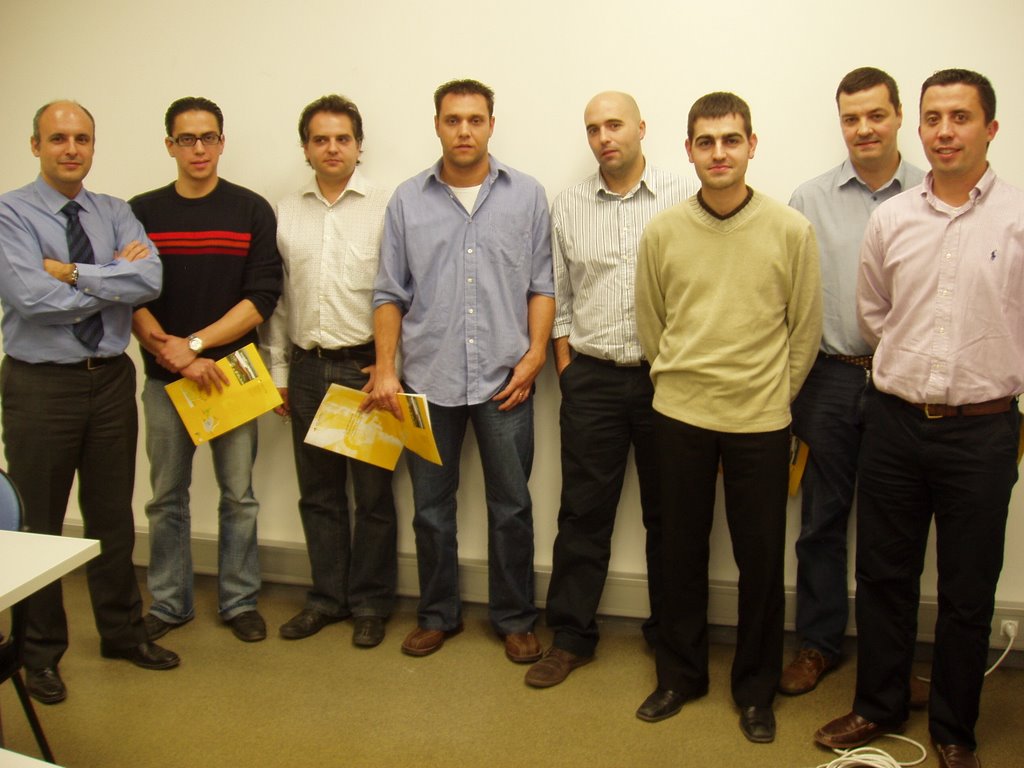
El pasado viernes, 10 de octubre, se inció, una nueva edición (la tercera) del Postgrado de ASCAMM en “Dirección y Gestión de Plantas Industriales".
En esta ocasión han sido 9 empresas las que han confiado a ASCAMM la formación de sus profesionales en los siguientes ámbitos genéricos:
- organización y gestión empresariales
- planificación y gestión de los sistemas productivos
- plantas de producción flexible
- mejora de procesos industriales
- gestión del mantenimiento integral
- aspectos económicos y financieros de los proyectos industriales
- gestión e integración de la calidad total y del medio ambiente
- evaluación de los costes y la eficiencia
- gestión de recursos humanos y equipos de trabajo
- gestión de la innovación
- estampación metálica
- inyección de termoplásticos
- fabricación mecánica
- aleaciones no férreas
November 24, 2006
Porta22 y ASCAMM
 El próximo lunes, 27 de noviembre, Porta 22, el espacio de Nuevas Ocupaciones de Barcelona Activa, organiza, emmarcado en su programa de actividades, una charla sobre el Perfil del Director de Proyectos.
La conferencia lleva por título "Una nueva ocupación: La Dirección i Gestión Integrada de Proyectos" y será conducida por cuatro miembros del Capítulo de Barcelona del PMI, el Project Management Institute.
La información y agenda de la misma puede ser consultada en http://www.barcelonactiva.es/aplic/bd/bna0agen.nsf/agenda?readform&idi=CT&qry=Q&cer=Porta22
Uno de los cuatro ponentes del PMI será un servidor, Ramon Costa, Director de los Servicios de Formación del Centro Tecnológico ASCAMM, responsable de presentar la Dirección y Gestión de Proyectos en el ámbito de las Tecnologías de la Información y la Comunicación, TIC.
Las otras tres ponencias girarán alrededor del PMI y la figura del Director de Proyectos, sobre los proyectos en el ámbito de la construcción y la formación contínua de este perfil.
November 10, 2006
Learning for Plastics
At the beginning of 2006, October, it was the kick-off meeting of the “Learning for Plastics” project into the European Comission Leonardo's Program, in Brussels (http://www.vkc.be/index2.php?page=leonardo_ENG&lang=ENG).
One the participants in this project is ASCAMM, represented, in the meeting, by Ramon Costa, Director of Training Services and José Bas, Engineer of Research & Development Area.
The project “Learning for Plastics” aims at developing a fully integrated learning package for persons with basic knowledge about extrusion and injection moulding.
This package should enable the target audience to have full and easy access to up-to-date technical information about extrusion and injection moulding.
The current European plastics industry is confronted with an increasing competition, mainly from the upcoming Asian countries. Competition is especially harsh on the production of plastic products with a simple production process. In order to survive, the European plastics industry must improve its knowledge and share his know how on a European level and focus on the production of more complex products.
Therefore the workers and future workers in this industry must increase their knowledge about the techniques, methods and materials concerning extrusion and injection moulding. Nowadays the available know how is spread over European institutions.
Therefore the partners in this project consortium, all outstanding professional knowledge centers on plastics technology, will make an inventory of the available knowledge, consolidate the outcome and make this knowledge available through e-learning materials.
The course will integrate the available state of the art scientific knowledge of the universities and the working knowledge of the companies.
In order to make the course easy accessible, we will make use of ICT techniques such as animations, simulations, movies, …
The materials will be programmed in Flash. Moreover, we will use practical examples, best practices,… to make the assimilation process as easy as possible.
The materials will be available in the languages of the project partners, i.e. Dutch, Spanish, German and French.
The end users of the e-learning materials are experienced technicians and operators in the plastics industry, high school and university students and people that have completed basic training on extrusion and injection moulding.
We will provide the e-learning materials to high schools, technical universities, training institutions and individual companies. All the project partners themselves will also use the materials in their trainings and education. In order to maintain the e-learning materials, we will develop a European platform that guarantees the sustainability of the cooperation.
Similar institutions in other European countries will be actively stimulated to join this platform.During two years all the participants of the project (technology centers, enterprise associations and universities will work together to comply this objective.
One the participants in this project is ASCAMM, represented, in the meeting, by Ramon Costa, Director of Training Services and José Bas, Engineer of Research & Development Area.
The project “Learning for Plastics” aims at developing a fully integrated learning package for persons with basic knowledge about extrusion and injection moulding.
This package should enable the target audience to have full and easy access to up-to-date technical information about extrusion and injection moulding.
The current European plastics industry is confronted with an increasing competition, mainly from the upcoming Asian countries. Competition is especially harsh on the production of plastic products with a simple production process. In order to survive, the European plastics industry must improve its knowledge and share his know how on a European level and focus on the production of more complex products.
Therefore the workers and future workers in this industry must increase their knowledge about the techniques, methods and materials concerning extrusion and injection moulding. Nowadays the available know how is spread over European institutions.
Therefore the partners in this project consortium, all outstanding professional knowledge centers on plastics technology, will make an inventory of the available knowledge, consolidate the outcome and make this knowledge available through e-learning materials.
The course will integrate the available state of the art scientific knowledge of the universities and the working knowledge of the companies.
In order to make the course easy accessible, we will make use of ICT techniques such as animations, simulations, movies, …
The materials will be programmed in Flash. Moreover, we will use practical examples, best practices,… to make the assimilation process as easy as possible.
The materials will be available in the languages of the project partners, i.e. Dutch, Spanish, German and French.
The end users of the e-learning materials are experienced technicians and operators in the plastics industry, high school and university students and people that have completed basic training on extrusion and injection moulding.
We will provide the e-learning materials to high schools, technical universities, training institutions and individual companies. All the project partners themselves will also use the materials in their trainings and education. In order to maintain the e-learning materials, we will develop a European platform that guarantees the sustainability of the cooperation.
Similar institutions in other European countries will be actively stimulated to join this platform.During two years all the participants of the project (technology centers, enterprise associations and universities will work together to comply this objective.
Subscribe to:
Posts (Atom)


